10 Proven Strategies That Actually Work
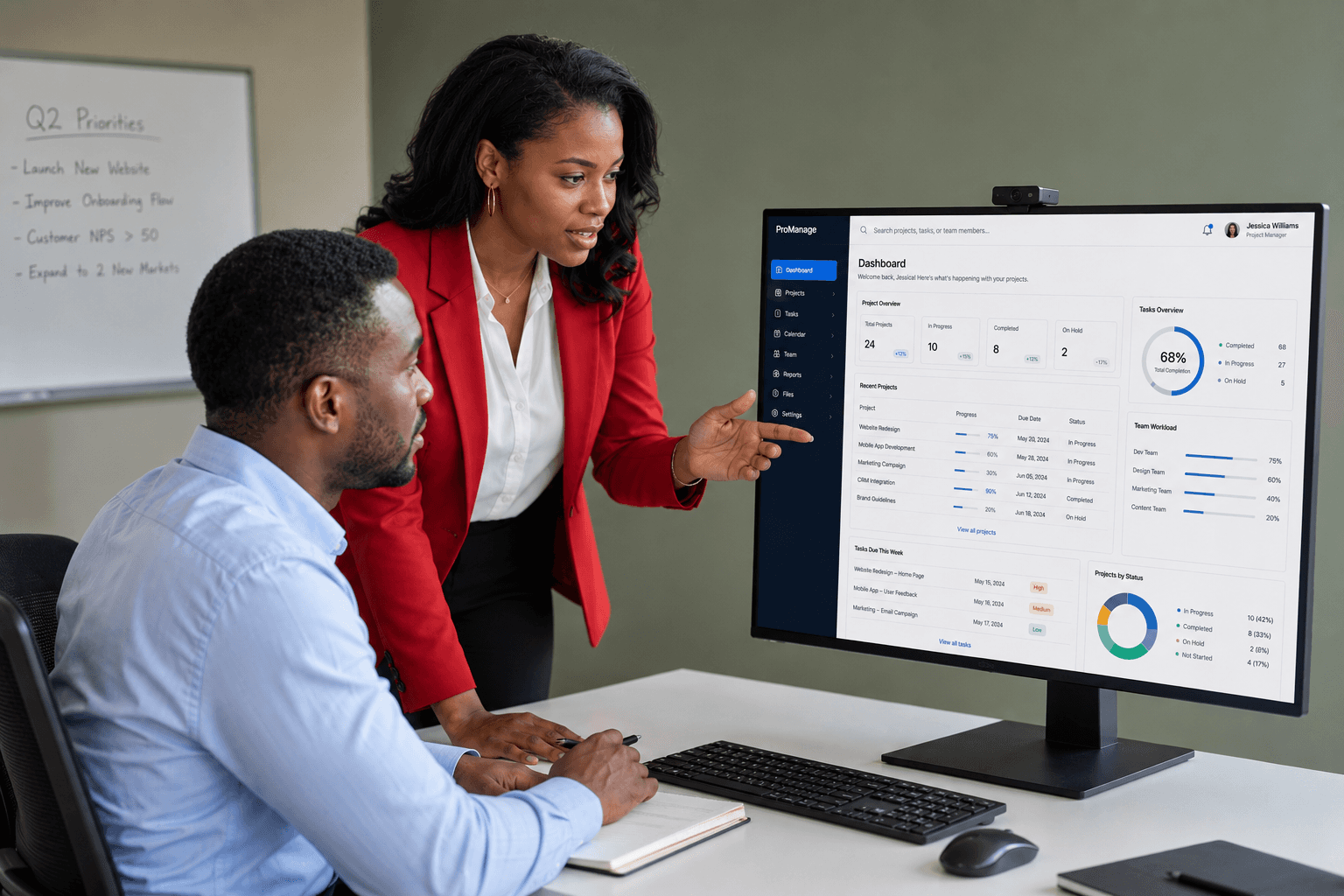
Table of Contents
Why Sales Performance Improvement Matters
If you want to improve sales performance, you're not alone — and you're asking exactly the right question.
Sales performance isn't just about hitting a number. It's the engine behind growth, hiring decisions, product investment, and company survival. Yet most sales teams are operating at a fraction of their potential. Research from Salesforce shows that 57% of sales reps are expected to miss their annual quota. That's not a talent problem. It's a systems problem.
The good news? With the right strategies, you can boost your team's close rate, shorten your sales cycle, and build sustainable revenue momentum — without burning out your people.
Here's exactly how to do it.
1. Set Clear, Measurable Sales Goals
You can't improve what you can't measure.
Start by setting goals that are specific, time-bound, and tied to real business outcomes. Vague targets like "sell more" don't motivate anyone. Specific targets like "close 12 new accounts in Q3 with an average deal size of $8,000" give your team something concrete to aim for.
How to do it:
Break annual revenue targets into monthly and weekly milestones
Set both activity goals (calls made, demos booked) and outcome goals (deals closed, revenue generated)
Make sure every rep understands how their individual number connects to the company's bigger picture
Reps who understand why they have a target — not just what it is — are far more likely to hit it.
Image idea: A dashboard showing a sales goal tracker with weekly progress bars. Alt text: Sales performance goal tracking dashboard showing weekly milestones
2. Invest in Sales Training and Coaching {#training}
Training isn't a one-time event. It's an ongoing competitive advantage.
Top-performing sales organizations spend 2x more on training than average ones. But it's not just about the budget — it's about the format. The most effective sales training combines:
Role-playing and live practice (not just slideshows)
Call recording reviews so reps can hear themselves and improve
One-on-one coaching from managers focused on specific skill gaps
The single biggest mistake most companies make is training new reps once during onboarding and then leaving them to figure the rest out. Continuous coaching — even just 30 minutes per week per rep — creates a measurable lift in performance over time.
Pro tip: Record your top performer's sales calls and use them as training material. There's no better coaching tool than real examples from your own team.
3. Use Data to Drive Sales Decisions {#data}
Your gut instinct isn't enough anymore.
Modern sales teams that outperform their peers rely on data-driven sales management. That means tracking the right metrics, identifying where deals are stalling, and making decisions based on patterns — not assumptions.
Start by auditing your current pipeline. Ask yourself:
Where do most deals drop off in the sales funnel?
Which lead sources convert at the highest rate?
What's our average sales cycle length, and where can we shorten it?
Once you know where the friction is, you can fix it. Without data, you're guessing. With it, you're solving.
Internal linking suggestion: Link to a related article on "Sales Pipeline Management Best Practices" or "How to Build a Sales Dashboard"
4. Optimize Your Sales Process
A great salesperson with a broken process will still underperform.
Your sales process is the playbook your team follows — from first contact to closed deal. If it's unclear, inconsistent, or outdated, it's costing you revenue every single day.
A strong sales process includes:
A clear definition of each stage (what does "qualified" actually mean for your team?)
Agreed-upon entry and exit criteria for each stage
Standard email and call templates for common scenarios
A defined follow-up cadence
Walk through your process from the perspective of a new rep joining your team tomorrow. If they couldn't figure it out from your documentation alone, it needs work.
Image idea: A horizontal sales funnel diagram showing stages from Awareness to Close. Alt text: Sales process funnel diagram from lead generation to deal close
5. Leverage the Right Sales Technology
The right tools don't replace good salespeople — they make good salespeople great.
A modern sales tech stack typically includes:
A CRM (like Salesforce, HubSpot, or Pipedrive) to manage contacts and pipeline
Sales engagement tools (like Outreach or Salesloft) for sequencing follow-ups
Conversation intelligence (like Gong or Chorus) to analyze calls and coach reps
Prospecting tools (like Apollo or LinkedIn Sales Navigator) to find qualified leads faster
But here's the important caveat: tools only work if your team actually uses them. Before adding any new software, get buy-in from your reps. Show them how it saves them time — not just how it gives you more visibility.
6. Improve Sales and Marketing Alignment
Misalignment between sales and marketing is one of the most common — and most expensive — performance killers.
When sales and marketing aren't working together, you end up with:
Leads that aren't sales-ready wasting rep time
Sales ignoring marketing content because it "doesn't match real conversations"
Conflicting messaging that confuses prospects
Fix this by creating a shared definition of a qualified lead. What actions does a prospect need to take? What does their company profile need to look like? Once both teams agree on this, follow-up speed, lead quality, and close rates all tend to improve.
A weekly 30-minute sync between sales and marketing leadership can prevent months of misalignment.
Internal linking suggestion: Link to "How to Create a Sales and Marketing SLA"
7. Focus on High-Value Prospects
Not all leads are worth your team's time — and the faster you figure that out, the better your sales performance will be.
Use an Ideal Customer Profile (ICP) to define exactly who your best customers are. Look at your top 20% of accounts and ask:
What industry are they in?
What size is their team?
What problem were they trying to solve when they found you?
How quickly did they close?
Then ruthlessly prioritize prospects who match that profile. Disqualifying bad-fit leads early isn't giving up — it's protecting your best reps' energy for deals that can actually close.
Pro tip: Build a simple lead scoring system so reps can instantly see which prospects deserve priority attention today.
8. Build a High-Performance Sales Culture
Strategy and tools matter. But culture is what determines whether people give 60% or 100%.
A high-performance sales culture doesn't mean a high-pressure one. The teams that consistently outperform aren't the ones with the most aggressive quotas — they're the ones where:
Reps feel supported, not micromanaged
Failure is treated as a learning opportunity, not a character flaw
Wins (big and small) are celebrated publicly
Feedback flows in both directions — not just from manager to rep
Sales managers set this tone. If your managers are spending more time in spreadsheets than talking to their reps, that's a problem worth fixing immediately.
9. Track the Right Sales KPIs
Tracking too many metrics is almost as bad as tracking none.
Focus on a short list of key sales performance indicators that actually predict revenue:
KPI | Why It Matters |
|---|---|
Win rate | Shows how often qualified deals close |
Average deal size | Reveals upsell opportunity and pricing leverage |
Sales cycle length | Shorter cycles = more efficient use of rep time |
Pipeline coverage ratio | Ensures you have enough deals to hit quota |
Activity per rep | Connects effort to outcome |
Review these weekly with your team — not to police activity, but to spot trends early and course-correct before the quarter ends.
Image idea: A KPI scoreboard graphic with five sales metrics highlighted. Alt text: Sales KPI dashboard showing win rate, deal size, and pipeline coverage metrics
10. Prioritize Customer Retention
The fastest way to improve sales performance isn't always to close more new deals. Sometimes it's to stop losing the ones you already have.
Expanding existing accounts is typically 5–7x cheaper than acquiring new customers. Yet most sales teams are almost entirely focused on new business.
Build a simple customer success motion into your sales process:
Set clear expectations during the sale about what success looks like
Schedule a 90-day check-in call for every new customer
Track expansion revenue as part of your sales team's compensation
Your best next customer is often already one of your current ones.
The Stat That Changes Everything
Here's something most sales blogs won't tell you:
The speed of your follow-up matters more than almost anything else.
Studies consistently show that contacting a lead within the first 5 minutes of them expressing interest makes them 21x more likely to enter the sales process than if you wait 30 minutes. Yet the average B2B sales team takes over 40 hours to follow up on an inbound lead.
That gap — between what the data says and what companies actually do — is where most sales performance improvements are hiding.
If you implement only one thing from this article, make it this: build a system that gets a qualified lead a human response within 5 minutes during business hours. You don't need better scripts, better tools, or better reps. You just need to be faster than everyone else.
This section is highly linkable — consider promoting it as a standalone statistic for backlink outreach.
Quick-Start Action Plan
Don't try to implement everything at once. Here's a 30-day roadmap to start improving sales performance immediately:
Week 1 — Diagnose
Audit your current pipeline and identify where deals are stalling
Review the last 10 lost deals and find the common pattern
Week 2 — Fix the Foundation
Define or update your Ideal Customer Profile
Document your sales process end-to-end
Week 3 — Activate Your Team
Schedule weekly one-on-one coaching sessions
Set up a shared KPI dashboard your team reviews together
Week 4 — Accelerate
Implement a 5-minute lead response system
Run your first sales and marketing alignment meeting
Ready to Take Your Sales Performance to the Next Level?
Improving sales performance is a process, not a single fix. But every great sales team started exactly where you are — with a commitment to getting better.
Start with one strategy from this article. Apply it consistently for 30 days. Then layer in the next. That's how lasting improvement happens.
→ Want a free sales performance audit template? [Download it here] (internal CTA link)
→ Looking to go deeper? Explore our pillar content on [Sales Strategy], [Sales Coaching], and [CRM Best Practices].
Related reading: How to Build a Sales Process | Sales Coaching Techniques That Work | Best CRM Software for Small Teams